Special Exhibition

Special Presentation

Triumph of Ornament: Fifteenth-Century Italian Silk-Weaving

26 April – 8 November 2015

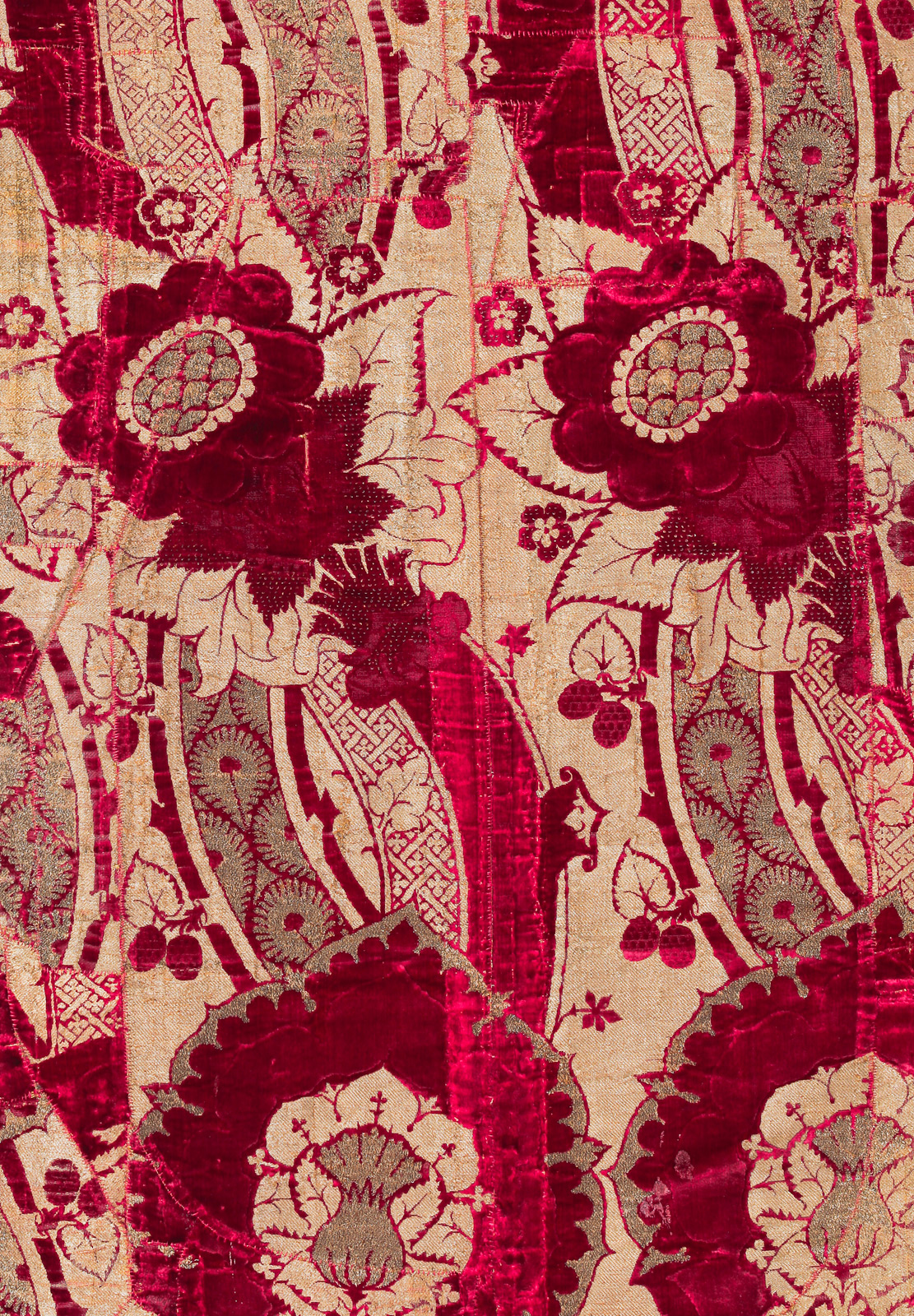
Italian silk-weaving reached its first great apogee in the fifteenth century. Cities like Lucca, Venice or Florence rose to become leading hubs for luxury textile production and trade. They were competing with the traditional silk-weaving centres of the Near East, Persia and China, whose technical and artistic innovative potential they soon surpassed. The patterns created are remarkable for their extraordinary dynamism, expressive potency and monumentality and to this day count among the greatest achievements of European ornamental design
PressetextCommuniqué de pressePress ReleasePressetextMaster’s Thesis Poster

Novel Patterns It was the rise of velvet weaving in the course of the fifteenth century that ushered in the change. Patterns in velvet are generated not by the weft but by the warp threads. This fact led to some new departures among pattern designers, too, who began aligning their ornaments lengthwise instead of breadthwise, while their forms became ever more monumental. Fig.: Gold-brocaded velvet with diagonal wavy vines, Italy, 1430–1440, inv. no. 1976

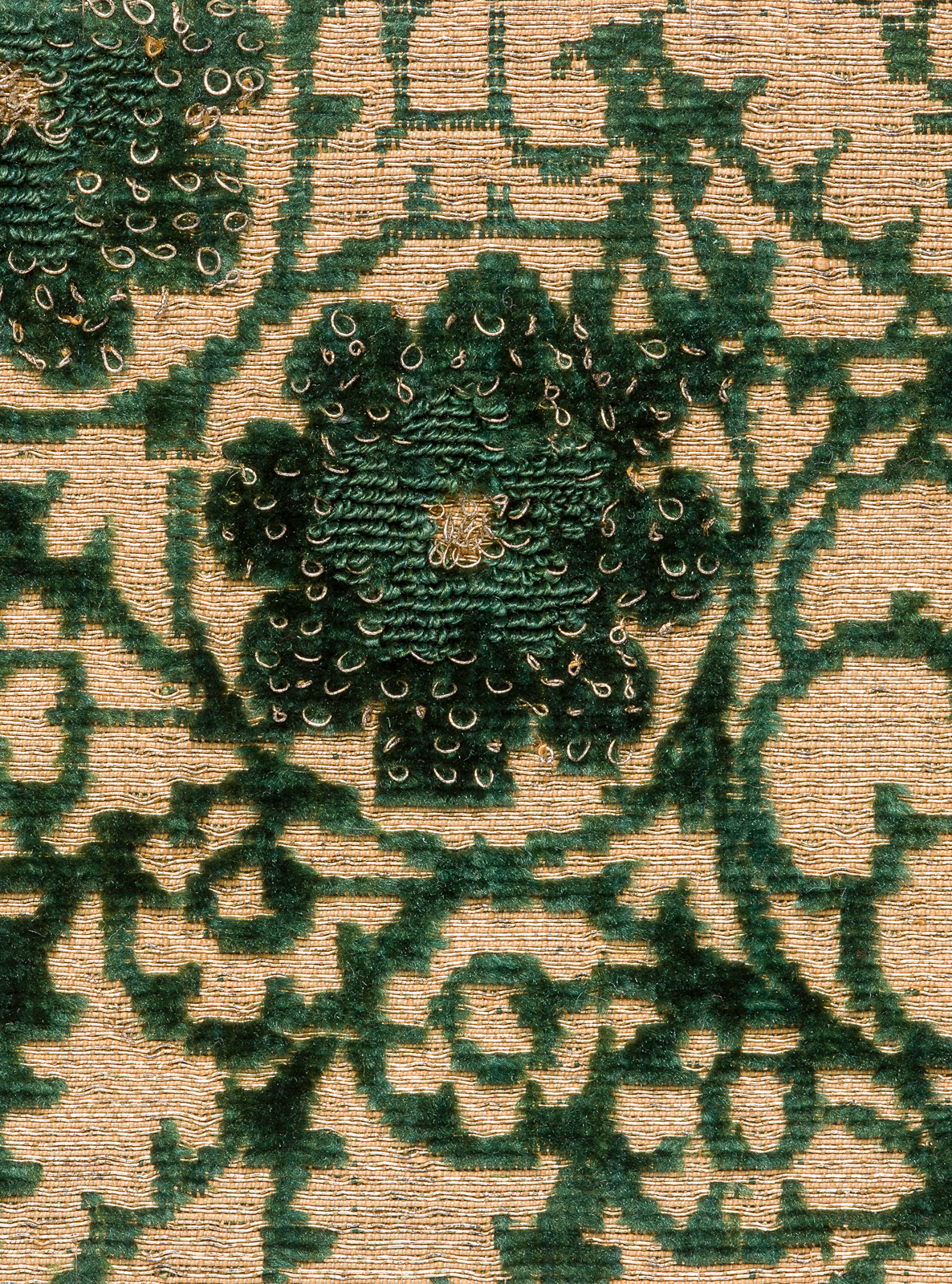
Masterful Technique The material cost of velvet production was extraordinary, as was the level of expertise demanded. Woven in different colours and teeming with a range of ornamental effects, the Italian velvets of this period constitute an exquisite union of imaginative artistry and consummate craftsmanship. Fig.: Velvet with gold thread and gold loops woven in, Italy, 1470–1480, inv. no. 2767

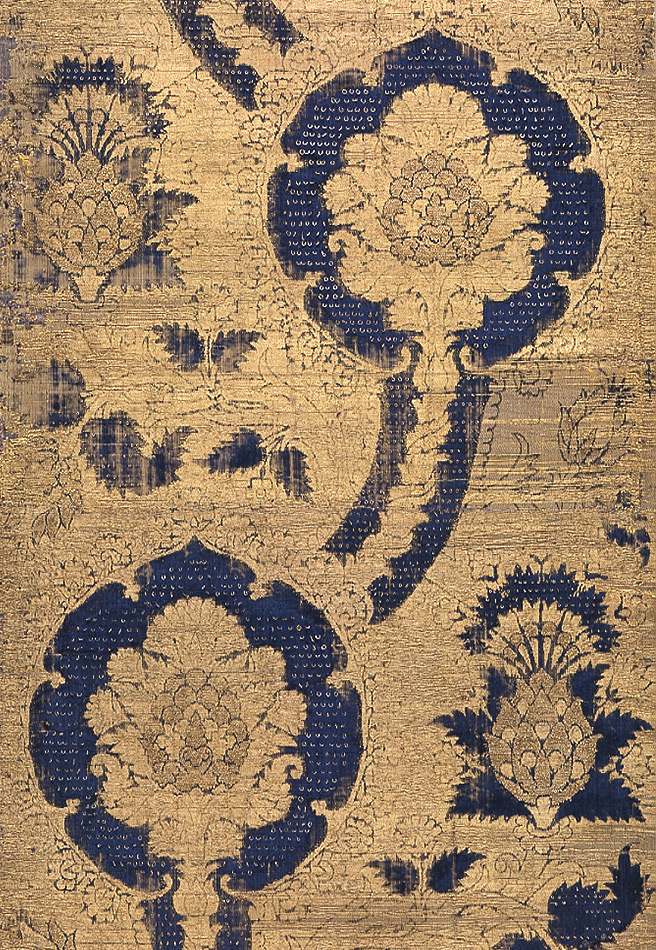
Fascinating Glamour  Most fascinating of all was velvet “cloth of gold” – velvets in which not just large parts of the pattern but even the background were woven in gold thread. Almost the entire surface of these materials is gold and the coloured silk pile serves merely to delineate single lines and motifs. Fig.: Gold-brocaded velvet with wavy vines, Italy, 1450–1470, inv. no. 525

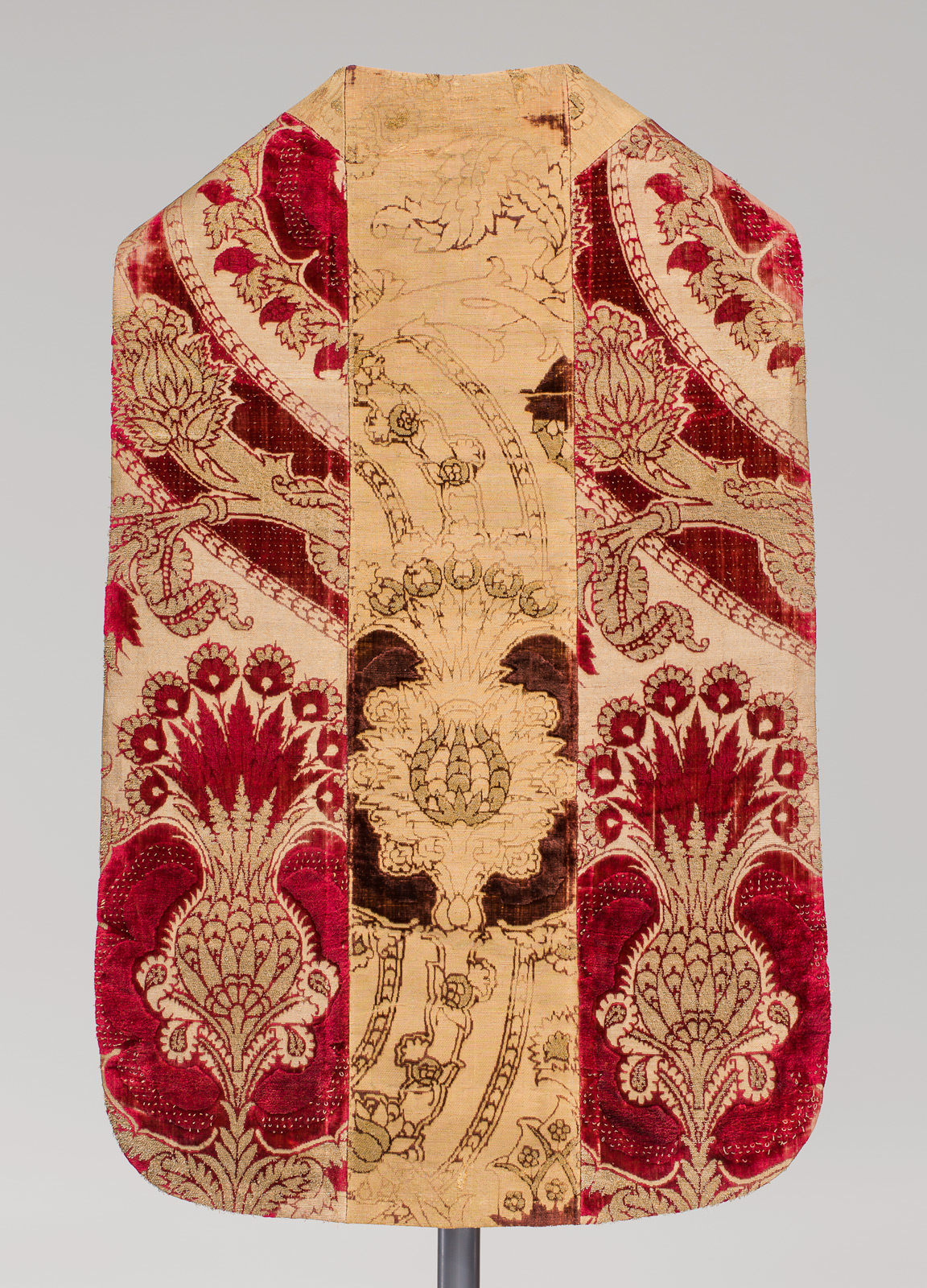
Coveted Luxury The manufacture of costly textiles was complicated, time-consuming and expensive and only the highest echelons of society could ever hope to own them. They were at once status symbol, luxury commodity and insignia and could be made up into ceremonial robes both sacred and secular or used to adorn thrones and altars. Fig.: Liturgical vestment made of two gold-brocaded velvets, Italy, 1460–1470 (side parts), 1470–1480 (middle part), inv. no. 630

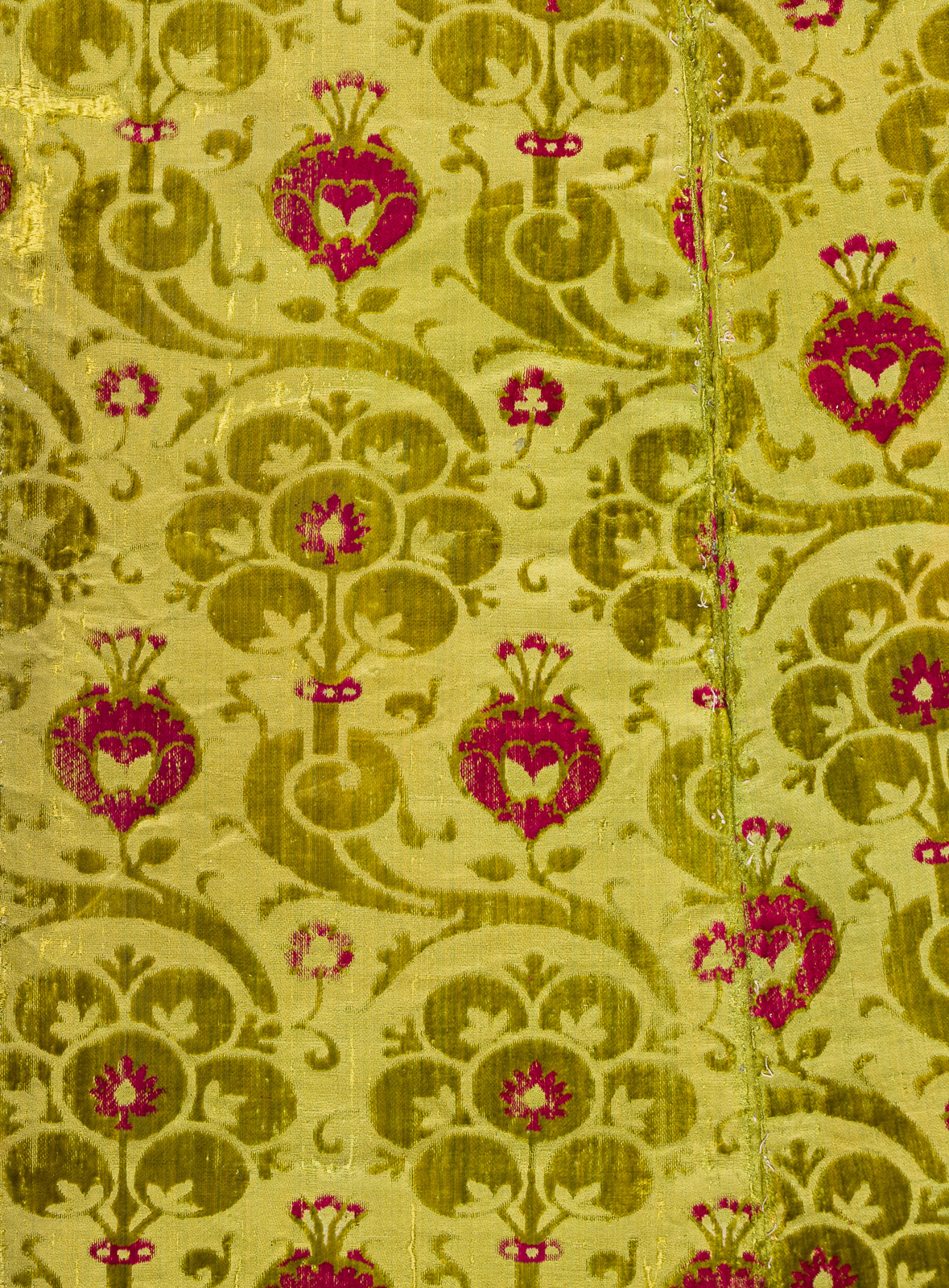
Artistic Autonomy While Italian Renaissance sculpture and painting are remarkable for their realism and close observation of nature, the silks of this period are informed by diametrically opposed artistic concepts. Around 1500, at the zenith of the Renaissance, Italy’s silk weavers excelled in the production of two-dimensional, stylized forms of the greatest opulence and elegance. Fig.: Multi-coloured velvet with fruits, flowers and diagonal vines, Italy, ca. 1420, inv. no. 5288