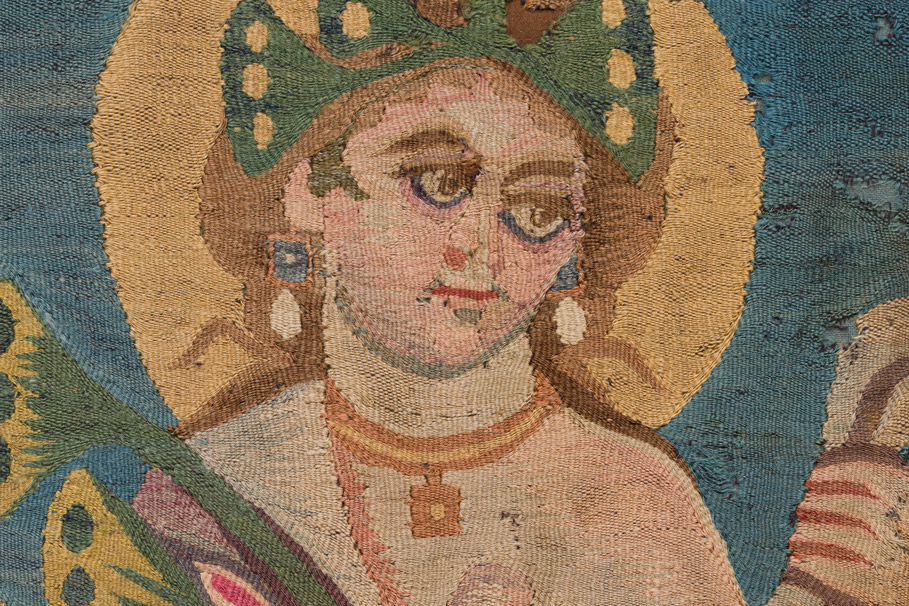
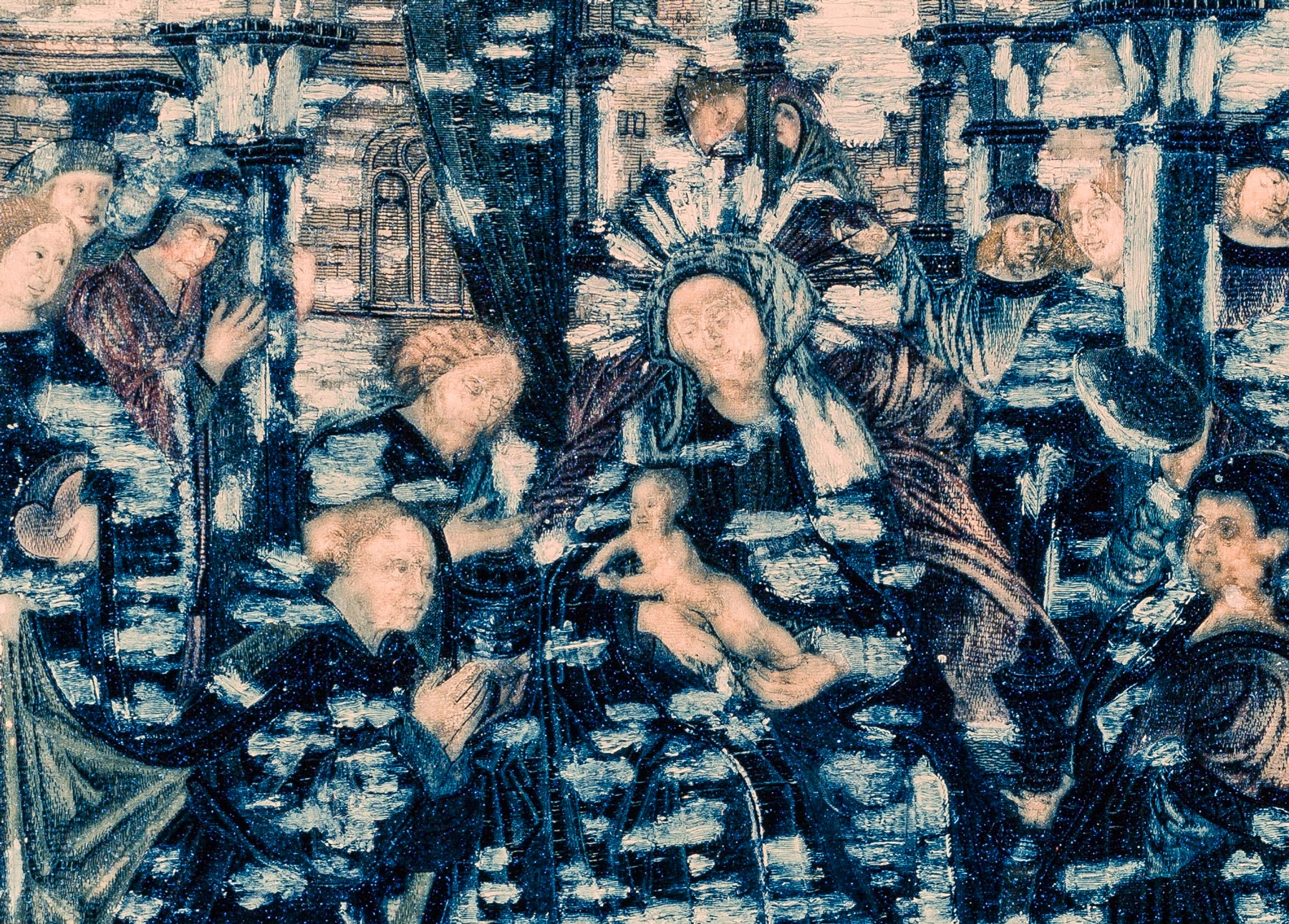
The Abegg-Stiftung’s inventory of sixteenth-century figural embroideries comprises some 35 objects, which vary considerably in terms of function, context and level of sophistication. Included among them are a triptych from the Netherlands and orphreys from liturgical vestments from Spain, Italy, France, the Netherlands and the German-speaking lands, elaborately embroidered in silk and gold thread. To these can be added some parts of vestments used in the Eastern rite that are likewise lavishly embroidered in gold. To round off the collection, there are linen and colourful wool embroideries that once served as luxury textile furnishings for well-to-do Swiss burghers.
Besides analysing thematerial and technical properties of the works under consideration, the author also engages with their iconographic programmes. The period and place of origin can often be inferred from their stylistic appearance. Given the vastness of the regions where such embroideries were produced, however, such work calls for a broad perspective that includes other genres. Painting and graphic arts are especially helpful in dating and locating the objects. Some rare archival finds have made it possible for the circumstances behind the production of two liturgical vestments from Valencia along with details of their subsequent history to be reconstructed. These, in turn, have supplied important clues for other objects about which very little is known.
The project was conceived as a continuation of the collection catalogue «Mittelalterliche Textilien III: Stickerei bis um 1500 und figürlich gewebte Borten» (Medieval Textiles III: Embroidery until c. 1500 and woven orphreys with figural depictions).
Prof. Dr. Evelin Wetter
Curator of Textiles of the 13th–16th Century
Dr. Caroline Vogt, textile conservator
Caroline Pilière, textile conservator
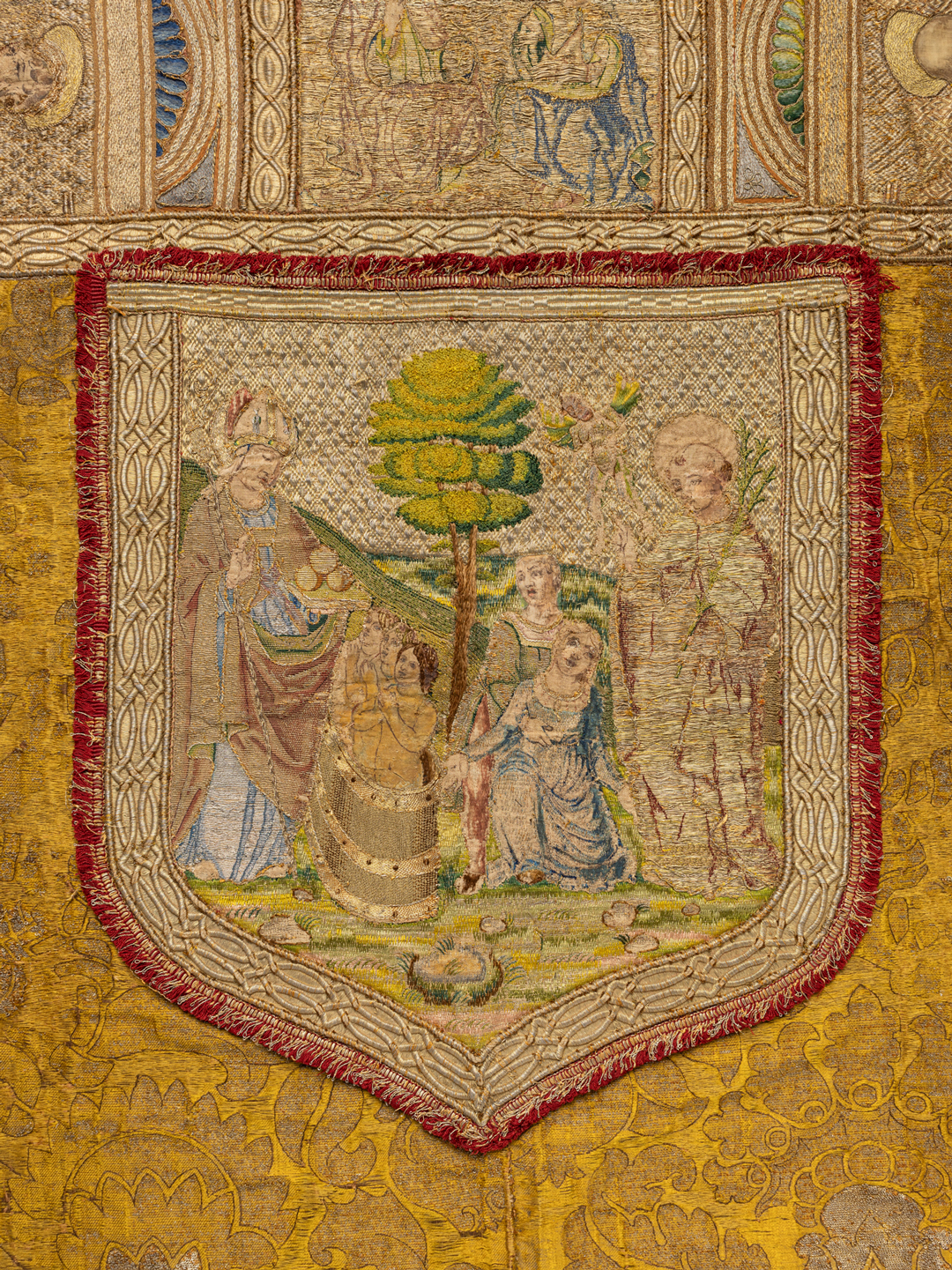
Embroidered back panel, Valencia, 3rd quarter of the 16th century, silk and metal threads, Abegg-Stiftung, inv. no. 881 | The pluvial or cope thus adorned comes from the parish church of St. Nicolas and St. Peter the Martyr in Valencia. The embroidery shows two scenes from the lives of the two patron saints, each of whom is identified by his typical attributes.